When it comes to clearing land, most property owners assume the process looks the same as it always has — chainsaws, bulldozers, dump trucks, and a big pile of debris at the end. But forestry mulching has changed the game completely. If you're deciding between the two, here's what you need to know.
How Traditional Land Clearing Works
Traditional clearing is a multi-step process. A crew comes in with chainsaws and a bulldozer to cut and push trees, brush, and stumps into piles. Those piles are then loaded onto trucks and hauled to a landfill or burn site. Depending on the project, a grading contractor may follow to level the ground.
Each of those steps involves different equipment, different crews, and different costs. The timeline stretches out, and you're left coordinating multiple contractors. If you're burning debris, you also need permits — and a window where weather and local regulations allow it.
How Forestry Mulching Works
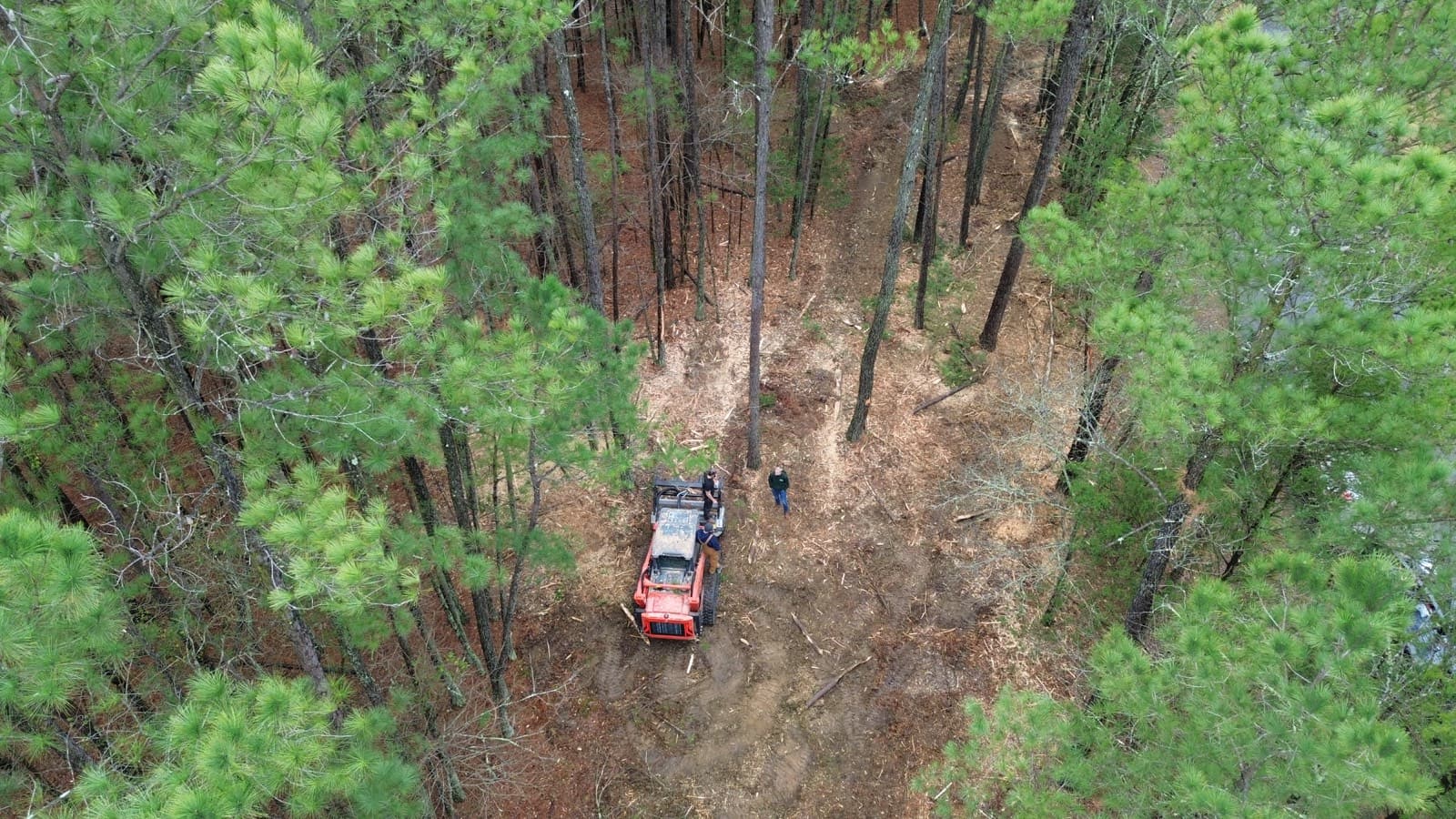
Forestry mulching is a single-machine, single-pass process. A compact track loader fitted with a high-powered mulching head drives through the property and grinds everything — trees, brush, stumps, and undergrowth — into fine wood chips right where it stands.
The mulch stays on the ground as a 2–4 inch natural layer. There's nothing to haul, nothing to burn, and no second crew needed. The machine operator handles everything from start to finish.
Cost Comparison
This is where forestry mulching really pulls ahead. Traditional clearing typically costs 30–50% more than mulching for the same acreage. The extra cost comes from hauling fees, dump charges, fuel for trucks, burn permits, and the labor of multiple crews.
A typical 1-acre residential clearing job in the Rock Hill area might cost $3,000–$5,000 with traditional methods. Forestry mulching for the same lot usually comes in at $1,500–$3,500 depending on vegetation density.
Time and Convenience
Traditional clearing can take several days to over a week for a residential lot when you factor in cutting, hauling, and cleanup. Forestry mulching typically handles the same area in a single day — sometimes less.
There's also less coordination on your end. With traditional clearing, you may be dealing with a tree service, a hauling company, and a grading contractor. With mulching, it's one call, one crew, one day.
Environmental Impact
Forestry mulching is significantly better for the land. The mulch layer left behind prevents erosion, retains moisture in the soil, suppresses weed regrowth, and breaks down naturally to enrich the soil over time.
Traditional clearing strips the topsoil, exposes bare earth to erosion, and sends tons of organic material to a landfill. If the lot sits empty for any period after clearing, you'll often see washouts and aggressive weed growth.
When Traditional Clearing Makes More Sense
There are some cases where traditional methods are the better fit. If you need the land graded to a specific elevation for construction, or if you're removing very large hardwoods (18+ inch diameter), traditional equipment may be necessary. Some commercial projects with strict grading specs also require bulldozer work.
But for most residential lots, overgrown properties, easement clearing, and trail work — forestry mulching is faster, cheaper, and better for the land.
The Bottom Line
For the majority of land clearing jobs in the Rock Hill and York County area, forestry mulching wins on cost, speed, and environmental impact. It's a one-step process that leaves the property clean and ready to use — without the headaches of coordinating multiple contractors.
If you're not sure which method is right for your project, we're happy to walk your property and give you an honest recommendation. Our estimates are always free.